- News
- Article
Proserv expands global reach amid evolving energy challenges at home and abroad
Follow us
CEO Davis Larssen on the challenges and opportunities at home and abroad for British industry
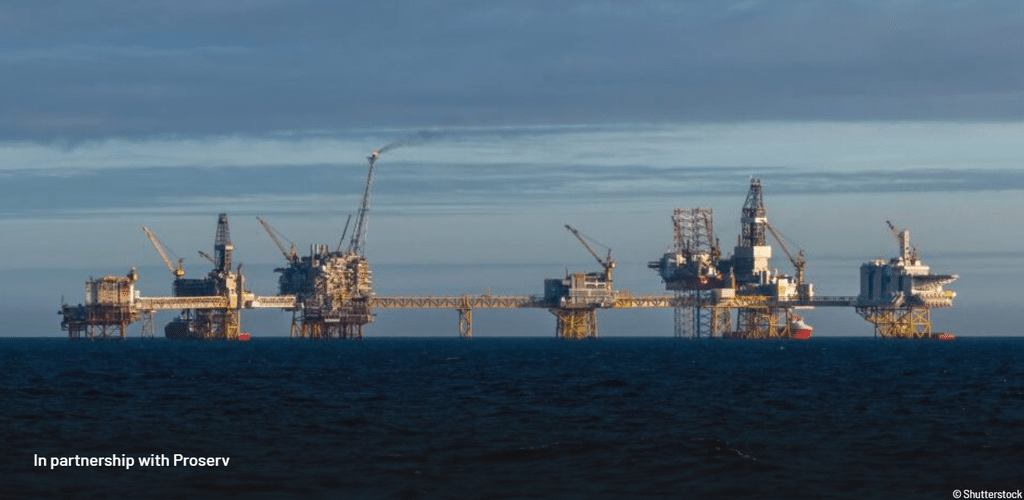
There is still great uncertainty over the future of the North Sea industry
There is a lot to consider for UK firms involved in the energy industry right now. From geopolitical shocks to the drive to net zero and beyond, it is a time of unprecedented change.
In the North Sea, the recent approval of the Jackdaw gas field perhaps signals a new direction for the current government. But the future of the Rosebank field to the north remains uncertain. Proserv has huge experience in this dynamic landscape. The Aberdeen-based controls and monitoring specialist has a centre of excellence in the Middle East and works on projects across all the world’s major energy basins. Energy Voice sat down with Proserv’s CEO, Davis Larssen, to discuss developments and their effect on the UK. The conversation ranged from the challenges at home to the opportunities abroad, and how to make genuine progress in the energy transition.
UK Government and future of the North Sea
Davis Larssen, CEO of Proserv
As an Aberdeen-headquartered company It would be remiss not to start with getting your view on the UK Government having approved production at the Jackdaw gas field, while maintaining its commitment to net zero and ruling out new exploration licences. Does this signal a more pragmatic approach to the North Sea? What does it tell you about the need for a clearer, longer-term energy policy that gives companies like Proserv the confidence to invest in UK jobs, technology and supply chains?
Jackdaw is a good and positive signal, although it is well overdue. I don’t honestly think it reflects a broader positive or pragmatic policy for the North Sea. The presumption against new exploration licences is not a pragmatic approach, especially when our near neighbours in Norway continue to explore and develop effectively the same energy basin.
It was the only sensible outcome, but I’m worried it does not reflect the pragmatic approach we need, given the geopolitical situation the UK seems to be stuck in under the current government. A lot more needs to be done to establish a clearer, long-term energy policy that will create and sustain investment and jobs in the UK.
Confidence must return
I would definitely like to see Rosebank approved as well. We need to re-instil confidence, so people want to invest in the UK. At the moment, people do not want to put their money here because it is seen as an unstable and volatile financial environment. The UK government’s stance is almost unique among the world’s energy basins, at a time when energy security and self-sufficiency are ever more important because of the conflicts around the world.
I fully support the energy transition, both personally and professionally through Proserv, but you cannot flick a switch overnight. There is a long way to go, and we need a pragmatic, sensible approach. There are not enough jobs in renewables today to absorb the people leaving oil and gas. As activity declines, we risk losing people from the workforce altogether or to other parts of the world where the energy economy is still booming. We risk losing investment and infrastructure as well.
Taking UK expertise to global markets

Proserv’s Dubai hub is one of several facilities across the Middle East
You’ve spoken about the challenges of securing work in the UK North Sea and the need for Proserv’s technology to compete globally. As you prepare to exhibit at ADIPEC, how important are the Middle East and other international markets to Proserv’s growth strategy, and what does the UK need to do to ensure its subsea engineering expertise remains globally competitive?
International markets are very important. The UK is still an important market for us, and we have won work here recently. But five or six years ago, probably 40% of our global revenues came from the UK. Now it is in the high teens at best. It remains critical because it is where the majority of our employees are based and where we are headquartered, but increasingly I spend more time travelling to other energy basins, such as Houston, where I am at the moment. That is where the activity is and where clients want to engage with us.
The Middle East has historically been one of our biggest markets. We have more than 250 employees across the region, so it is critical for several reasons. But it is highly unpredictable at the moment because of the conflict, and my fear is that the local environment may get worse because of the geopolitical situation.
Harder to compete internationally
Other energy markets are also critical: West Africa, the US Gulf, Australia, Southeast Asia and Brazil. They have a very different energy philosophy from the UK’s today.
We build a lot in the UK and sell it overseas, and at the moment we do that quite well. But as UK costs continue to rise, particularly the energy costs of heating and running facilities, it becomes increasingly difficult to compete with companies manufacturing in places such as Brazil and Southeast Asia. If we cannot keep people fully occupied, we risk losing that knowledge base through early retirement or relocation to markets offering more exciting jobs and a vibrant economy.
Ultimately, we need a sign that says the UK is open for business. We need a stable fiscal regime and a 20-year strategic energy policy that, ideally, all political parties would sign up to as being in the UK’s best interests, whoever is in power.
At the moment, energy policy effectively flips every four or five years depending on which party is in government. Consistency of policy is the single biggest thing UK plc can provide to show the rest of the world that this is a place where people should want to do business.
Turning energy-transition ambition into commercial reality
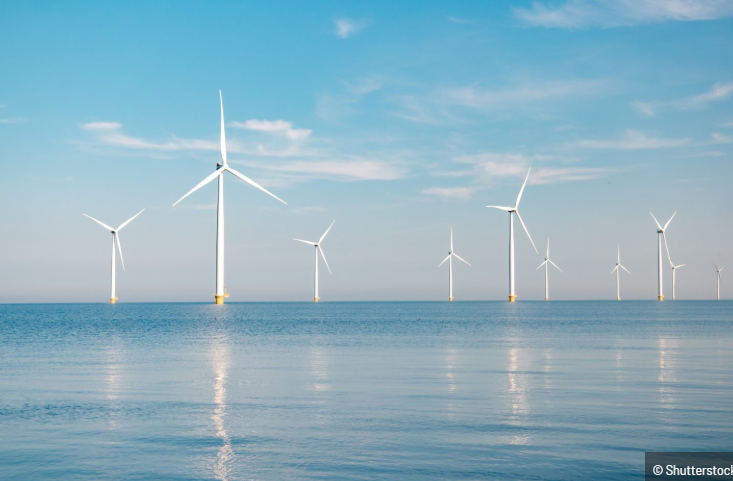
The shift to renewable energy will need to be carefully managed
Proserv has been applying its controls and monitoring expertise across both traditional oil and gas and emerging renewables. With offshore wind projects facing delays and uncertainty in the UK, where do you see the most credible near-term opportunities for technology transfer between these sectors, and what needs to change to turn energy-transition ambitions into commercially viable projects?
It is a tough question. Proserv is doing a lot to support the transition, but ScotWind is a good example of the challenge. The technology and solutions needed to develop offshore wind, particularly floating offshore wind, are still a long way away. There is a huge gap between transferring skills from oil and gas today into renewables tomorrow, and that gap is too big to span at the moment. Even some renewables operators are having to cut back because they cannot get the technology needed to develop parts of the market.
Both the UK and the US have been quiet in emerging renewables, particularly offshore wind, although the challenges are different. In the US, the position is driven by political views and could change quickly with a change of party. In the UK, I suspect we will miss the boat on offshore wind unless we are prepared to allow non-European original equipment manufacturers into the market and move beyond cybersecurity concerns as a barrier to entry.
Chinese technology debate
I know there is a big debate about non-European manufacturers entering the market, but we already rely on so much Chinese technology in laptops, phones and cars, as well as the resources underpinning that technology. I think we are kidding ourselves if we believe we can refuse Chinese wind turbine manufacturers entry to the UK and still meet the renewable targets we have set ourselves.
There are ways to overcome the perceived concern about turbines being switched off. If a country has a balanced energy portfolio, including oil, gas, wind, solar and nuclear, it is not overly reliant on any one energy source. The wind does not always blow and the sun does not always shine, so we need that balance. In my view, allowing Chinese manufacturers to enter the market and break the duopoly of European turbine manufacturers is the only way we will achieve the transition at a cost that makes renewables viable.
Europe, particularly Denmark and Germany, leads the way in wind, and there is a great deal we can learn from that. But the reality is that the technology and costs are not at a level that makes it a financially attractive investment.
While the energy transition is critical, we have to ask how much debt the UK is prepared to take on to achieve a more balanced energy portfolio.
The UK accounts for less than 1% of the world’s carbon emissions, so the savings we make are almost a rounding error globally. Germany continues to use coal-fired power stations while India and China are huge emitters.
I worry that we are taking UK plc towards bankruptcy while waving the green energy flag, given how small our contribution is to the global picture. India is effectively going through the equivalent of our industrial revolution. What right have we to prevent it from prospering and developing when we did the same 70 to 100 years ago?
There is a lot to do to turn ambition into reality, and I think we kid ourselves about the impact we are having globally.
Proserv are attending ADIPEC 2026 in AbuDhabi from November 2 to 5. Visit the team at Hall 12, Stand 12503.