Comments come after firm laid off 25 people from its global workforce.

Davis Larssen, CEO Proserv
Proserv will “continue to be in Aberdeen” if it remains “globally effective”, said the firm’s chief executive as he revealed job cuts and a dwindling North Sea order book.
“We’ve just gone through an exercise where I’ve restructured the Proserv leadership globally,” Davis Larssen, chief executive of the Aberdeen headquartered firm, told Energy Voice.
“It’s no secret, we’ve just made a number of people redundant in the UK, Norway and in the Middle East.”
A total of 25 people were let go by the firm during the restructuring programme, resulting in a “leaner, flatter leadership structure”.
The cuts came from the firm’s 800-person strong workforce, and Larssen emphasised the “small percentage” of employees impacted.
And although the UK was only one of the regions impacted by the redundancy round, a nosedive in oil and gas work and delays to renewable energy projects within the North Sea have the potential to drive decision-making going forward.
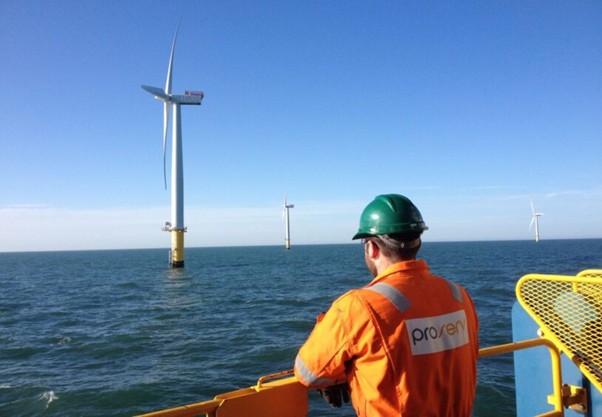
Proserv’s holistic cable monitoring system was deployed at the Dogger Bank wind farm.
“Increasingly, the kind of products we build and supply from the UK – for example, subsea controls – they need to be competitive globally,” Larssen explained.
“So, if we’re competing against people that are building these things in Brazil or Malaysia, for example, we have to demonstrate that our product reliability and quality – and on time delivery and price – is competitive.”
Despite Proserv doing “reasonably well” when competing with suppliers based in regions of high offshore activity, securing work from the UK “continues to be a challenge”.
“It does put the UK under a bit more of a spotlight,” said Larssen.
“Because if you have to send a typical oil and gas service technician on a plane to Brazil to do a job, you’re competing with Brazilian technicians who, in theory, can do the same job.”
Proserv hits out at North Sea oil policy
As the challenge of competing with overseas firms ramps up, the Proserv boss sees little evidence of change “whilst we continue, as a nation, to not invest in the natural resources that still sit within the North Sea.”
Looking at the “short term”, Larssen forecasts his order book to be “predominantly oil and gas,” even as the UK government plans to pass legislation that would outlaw exploration licences in the North Sea.
Under the Labour Party’s plan for UK oil and gas activity, already discovered resources near to existing infrastructure can be exploited via tiebacks, however, the prospect of a new, and licensed, field coming online is not on the cards.

To showcase how spending has shifted, around “45% of our revenue was derived from the North Sea” a decade ago, Larssen explained. Now, it’s “probably 15% North Sea and about 85% in overseas markets,” and this is a result of “the UK market shrinking”.
As a result, firms like Proserv are increasingly looking overseas to secure work. In recent years, Proserv outlined plans to deliver growth in the Gulf of Mexico, and it is now targeting Brazil as well.
UK offshore wind worries
But what about renewables? With government backing in the UK, focusing on cleaner energy, surely the firm that has worked on major offshore wind projects like Dogger Bank could see opportunities in the North Sea?
Apparently not, as projects continue to stall or get scrapped due to a plethora of issues causing headaches for wind developers. Grid connection times leave projects without a route to market, and transmission charges have hampered wind farms in the north of Scotland that secured leases in the 2022 Scot Wind round.
“I would have to say, the renewables transition is going a lot slower than what any of us imagined,” Larssen said.


The Dogger Bank offshore wind farm off the coast of Yorkshire.
“I think back to four or five years ago, when ScotWind was first announced, and there was this huge buzz around what we were going to do as a nation, creating this new floating offshore wind energy infrastructure, and how we could be world-leading.
“The reality is in the four years or so since then, we’ve hardly moved forward as a nation, and most of those projects are at risk.”
In light of this, despite Proserv “aggressively trying to get into renewables”, current market conditions make it “nigh on impossible in the UK sector to do that today”.
One major issue Larssen sees with the UK renewable energy market is the country’s decision to “not bring new players into the market”.
‘Mistake’ to block Ming Yang
Earlier this year, the Westminster government blocked Chinese turbine maker Ming Yang from setting up its planned manufacturing site in Scotland.
This has prompted a debate as to whether the government made the right decision when it cited national security concerns as the reason for not allowing the use of Chinese turbines.
“The decision around Ming Yang coming into the UK has been a very topical and public one, and I personally think it’s a mistake,” Larssen commented.
Despite Ming Yang’s plans getting scrapped, the UK is investing in state-backed firm GB Energy, which aims to invest in supply chain companies with technology fit for large-scale deployment.
“I think GB Energy are on the right track,” commented the Proserv boss.
“I think what they are trying to do is not easy. They’ve obviously got certain constraints they have to operate within, but at the moment, I think they are listening, they are learning, they are engaging with lots of companies across the operator base and the supply chain – us included.
“I would say, we’re having some very good, proactive conversations with them.”
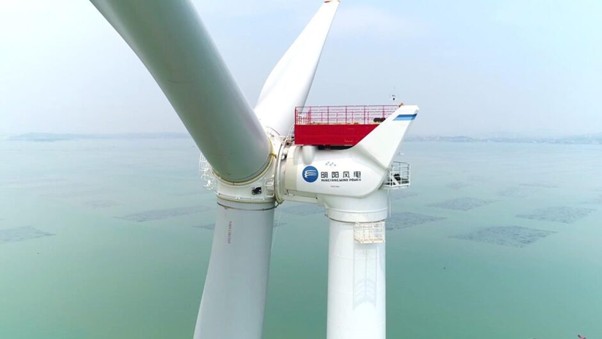

A Ming Yang offshore wind turbine.
His comments come after Conservative politicians branded GB Energy “one of the biggest scams of our generation which is driving away private investment”.
On Monday, the Government Property Agency kicked off the £1.7 million initiative to get GB Energy’s Aberdeen headquarters ready for the firm’s fast-approaching move-in date.
The state-backed firm is planning to host a jobs event in the Granite City next week as it is currently recruiting for eight senior roles set to be based in Aberdeen.
‘Bigger opportunities’ overseas
Despite stumbling blocks causing North Sea renewables projects to stall, Proserv sees the wider renewables market as a key growth area.
Renewables as a whole, but “offshore wind in particular”, stand to offer “big growth opportunities” for the Aberdeen business.
“Whether it’s fixed or floating, as offshore wind gets further offshore and you’re getting into a harsh environment, the need to have turbine agnostic, fully integrated control monitoring systems that you are comfortable are cyber secure – and nobody can access your ability to pull power back to the shore – is critical,” the Proserv boss explained.
“That’s what we’ve been doing in oil and gas for 40 years, and we think we can do it in renewables.”
Currently, mainland Europe and south-east Asia are the “growth markets” Proserv is targeting in the offshore wind market, the chief executive said.
Even after “great success” on UK renewable work, Larssen now thinks the “bigger opportunities” are “more likely to be outwith the UK.”
What is Proserv’s future in Aberdeen?
So, with opportunities presenting themselves in renewables and oil and gas outside of the UK, does it make sense for Proserv to remain headquartered in Aberdeen?
As Energy Voice inquired about the likelihood of Proserv retaining its Aberdeen footprint, Larsen revealed he had been “asked that very same question by a member of staff” in his firm’s Westhill base.
“We’ve had facilities in Aberdeen for the past 40-50 years,” he said.
“I live in Aberdeen, I’ve been with Proserv 16 years, and I’m married to a woman from Aberdeenshire, so this is where my kids were born, this is where they’ve been brought up, so this is home, and this is our headquarters.”

Proserv’s corporate HQ in Westhill, Aberdeen.
He explained the firm has “well-established infrastructure” in the north-east of Scotland.
However, as the “slant” on where business is coming from has shifted to outside of the UK, questions could start being asked about the firm’s north-east presence.
“So, we will continue to be in Aberdeen whilst we continue to be globally effective,” Larssen said.
“For me personally, that means I spend a lot of time traveling in airplanes to go and visit customers, and I haven’t yet got to the point where we have said ‘it shouldn’t be Aberdeen, it should be this place or that place’ because if I moved to London, Dubai of Houston, I would still spend time in a plane going to other parts of the world.”
The Proserv boss did concede that his firm has “a huge emotional attachment to the north-east of Scotland”, which also has a bearing on decision-making. Larssen added: “So, as long as that glue still makes sense, it will continue and there’s no plans to relocate the headquarters to anywhere else to be quite frank.”